Portfolio projects help new cabinet designers build credibility, sharpen skills, and create opportunity before they have years of client work behind them.
If you are early in your career, you might feel eager to gain more client experience but unsure whether the few projects you have completed are enough to convince new clients of your skills. Portfolio projects allow you to build confidence in your work, for yourself and for prospective clients.
Here are some creative ways new cabinet designers can expand their portfolios.
Creative Ways to Expand Your Cabinet Portfolio Projects
You can create meaningful portfolio projects on your own that demonstrate your current skill set and document your growth early in your career. The key is to approach them with intention. Instead of random concepts, focus on projects that address real challenges, clear users, and thoughtful decision making.
Here are four different approaches to portfolio projects that will help you grow as a deigner:
- Redesign a space around you.
- Design for a specific but fictional scenario.
- Create constraint based projects that mimic real world scenarios.
- Recreate a client project from another designer in your own way.
Trial projects let you practice faux scenarios to experiment and identify any gaps you have in your creative ability.
Redesign a Space Around You
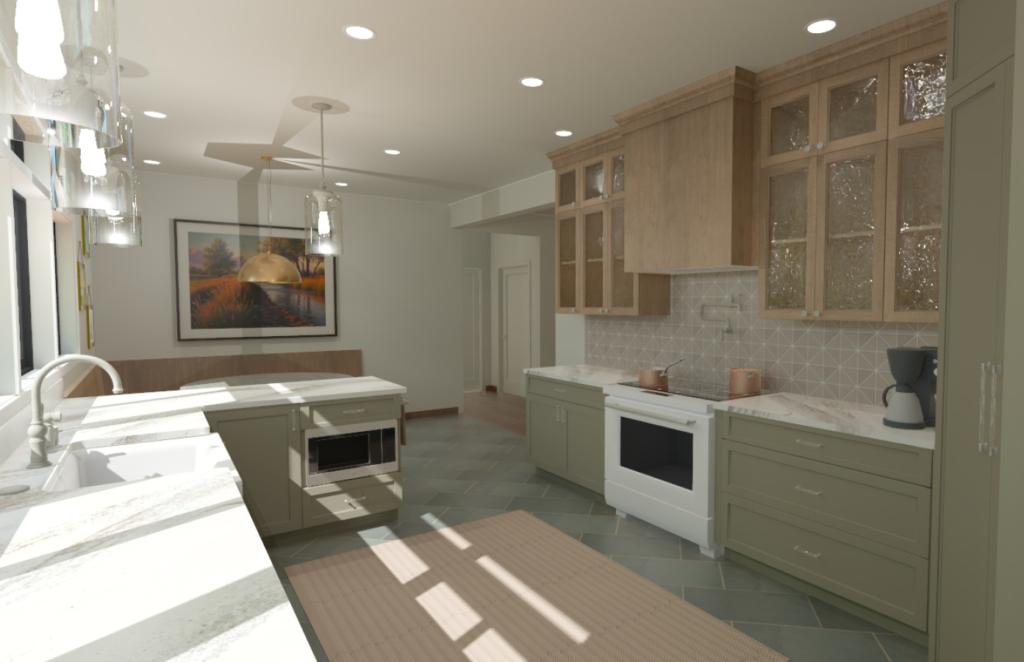
Look at a space you already have access to and treat it like a real client project. It could be your own kitchen, a friend’s bathroom, or a small apartment layout. Measure it accurately. Identify what is not working. Improve the storage, layout, lighting, and flow. Document your thinking. This process will allow you to practice solving practical challenges, not just creating something that looks good visually in a design program.
Design for a Specific but Fictional Scenario
Create a fictional client scenario or project brief for yourself to practice. Build the project around their needs. Define their lifestyle, budget range, and priorities. Are they a growing family? A single professional in a condo? A homeowner who entertains often? When you design with a specific persona or family in mind, your decisions become more intentional. Your portfolio projects will feel grounded and strategic rather than generic.
Social media content creators do this often to showcase their skills and entertain online. What would your favourite t.v. show character’s new kitchen look like? The “here’s how I would design this space” type of content can be used as a starting point to create a fictional client (and have fun doing it).
Create Constraint Based Projects That Mimic Real World Scenarios
Real projects always come with limits. Budget, square footage, plumbing locations, timelines. You can simulate that in your own work. Set a budget cap. Restrict material options. Design within a tight footprint. These constraints push you to grow your problem-solving skills. They force you to think about function, cost, and feasibility, which builds confidence before you work with actual clients.
Recreate a Client Project From Another Designer in Your Own Way
Choose a completed project you admire and redesign it from scratch. Keep the same footprint or general layout but reinterpret the materials, cabinetry style, and overall direction. How would you solve it differently? What would you prioritize? This exercise helps you analyze other designers’ decisions while strengthening your own voice. It also shows your ability to think critically rather than simply replicate trends. If you plan to publish this project, make sure you credit the original designer as your inspiration.
Use Portfolio Projects to Expand Your Skills
Portfolio projects are not just visual exercises. They are skill-building. If you want to grow, design with intention and focus on improving your technical confidence. If there is a step in the process that you don’t know how to do or that gives you anxiety, use this project as a test to figure it out!
Challenge yourself by:
- Experimenting with new styles you have yet to tackle.
- Use new cabinet configurations and products.
- Try specialty designs or custom work.
Use Portfolio Projects to Refine Your Presentation Skills
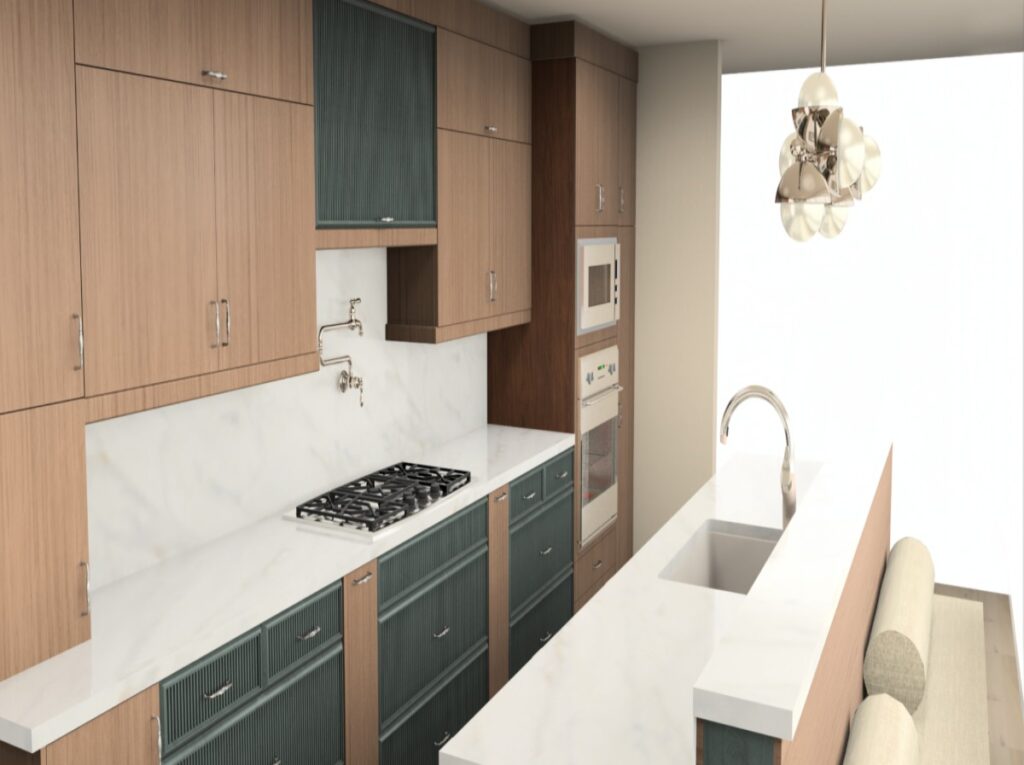
Use portfolio projects to practice clean layout plans, elevations, renderings, organized material selections, and concise written explanations. Ask yourself whether a showroom manager would understand your work and whether a homeowner would feel confident in your thinking. Clarity builds trust.
Practice presenting your projects to team members, family, or by yourself to build public speaking and presenting skills. Try different methods of presenting for example, in person or online. With presentation slides or without. Follow industry standards while adding your personal branding to the presentation.
Have Fun, But Treat Portfolio Projects Like Work
Have fun with your portfolio projects, but treat them like real work. Set deadlines for yourself and commit to them. Do not get lazy just because no one is waiting on you. At the same time, do not rush through the process just to finish. Give each project your full effort. The habits you build now will carry into your client work later.