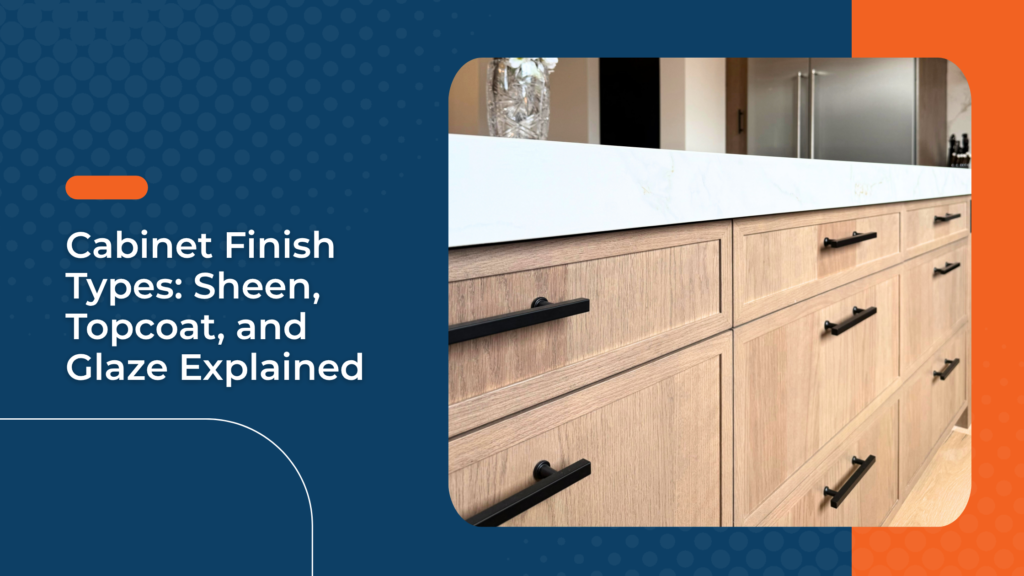
White oak is one of the most requested species in kitchen and bath design right now, and it is also one of the most common sources of a difficult conversation: why do my white oak cabinets look different than the sample? That is not an ideal reaction for designers, manufactures, or clients. Here’s how can this concern can be avoided so the reaction is “wow I love my cabinets!”
What causes this issue to begin with?
Managing expectations and understanding where the variation in white oak comes from is one way to ensure everyone is on the same page and increase the number of positive project outcomes. There are a few reasons why a sample may not be a perfect representation of every cabinet made from that material.
What you need to know:
- Variation is the material, not always a mistake. White oak changes colour within a single tree, between trees, and across growing regions. Every high end cabinet maker deals with it, this is an industry chalenge right now.
- Grade and waste set how much variation a client gets, and that is often a price question. More consistency means using a smaller percentage lumber (there are only so many “perfect” pieces. When a client asks why the uniform look costs more, the answer is that most of the trees did not qualify.
- The gap between expectation and material is what becomes a warranty claim. Those claims cost the manufacturer time, and cost the designer margin and client trust. A conversation at the design stage prevents almost all of them.
Is color variation in white oak a defect?
No. Color variation in white oak is a natural property of real wood, not always a manufacturing fault or a quality problem.
Every high end custom cabinet maker deals with this. It is not a question of finding a manufacturer who has solved it, because it cannot be solved, only managed. What separates one supplier from another is how well they select material, how consistently they finish it, and how honestly they set expectations with the people selling it.
Variation is what makes wood, wood. If you are looking for absolutely no variation, consider engineered wood materials like TFL.
What causes white oak to vary in color?
Within a single tree. Color and grain changes within a tree. Two boards cut from the same tree can look noticeably different.
Between trees. Individual trees grow differently depending on their conditions, so no two logs behave the same way.
Across growing regions and within the species. White oak is not one uniform thing. Where the trees are harvested affects colour, and there is variation within the white oak species group itself.
On top of all three, natural stress plays a role. Climate and weather events during a tree’s life impact how the wood looks. Was the region where the trees were harvested experiencing a few years of drought? Pest blight? Are suppliers being forced to source wood from new forests?
Resource availability impacts what suppliers can deliver to manufacturers.
How does lumber grade affect color variation?
Suppliers sort lumber into grades. Higher grades are more selective, which means more consistency in colour and grain. Lower grades allow more variation. Some manufacturers have custom grades or agreements with suppliers to select their wood products.
This matters for your sales conversation because grade sets the expectation. A client buying a lower grade product should not be expecting the uniformity of a higher grade one. It is worth a note that this is selectivity, not perfection. Your manufacturer should communicate what is an acceptable imperfection or natural variation and what will not be expected in the final cabinet.
What are flitches, and why do they cause problems?
A flitch is a section cut from the log of a tree. The flitches then create the veneer sequence that is made into sheets of lumber.
Flitch width. Manufacturers can mitigate variation impact to a degree by being deliberate about the widths they select.
Stripy flitches. Some material comes through with a pronounced striped appearance. This is real wood behaving like real wood. Even with the best grades, it is sometimes unavoidable to have some striping.
Why does a more uniform product cost more?
Getting a highly consistent look means using only the portion of each log or being very selective on which logs are used. That creates a narrow standard and creates more waste. The more selective the sort, the smaller the usable percentage, and the higher the cost of everything that makes it through.
This is the honest answer to the question your client is really asking, which is some version of “why can’t I just have the one that looks like the photo.” They can. It costs more, because most of the trees did not qualify.
Naming that tradeoff plainly tends to work better than defending the price. It reframes the conversation from a quality complaint into a budget decision, which is a conversation a designer can actually help with.
Where this shows up as warranty claims
Expectations around white oak and natural wood are a common source of warranty claims, and those claims are bad for everyone: the designer, client, and manufacturer. It costs everyone in either time, trust, or money.
This is the practical reason why expectation conversations are worth having at the design stage.
How do you set client expectations on white oak?
Pinterest and design media have made white oak look far more uniform than it typically is. Those images are usually a single carefully lit kitchen, often at a price point the client has not budgeted for. The gap between the inspiration image and what a given budget actually buys is where most disappointment is created.
A few things that help:
- Show real samples and be clear that samples represent the material, not a colour guarantee
- Explain that variation is expected in a natural product before install, not after
- If uniformity is the top priority, have the honest conversation about budget or about alternative materials
Frequently asked questions
Can you order white oak cabinets that all match?
This depends what you mean by “match”. Perfect uniformity is only available in manufactured surfaces such as TFL, which uses a decorative paper to duplicate the same grain pattern and color over and over. Natural products will have variation, even if manufacturers do their best to keep wood selection consistent.
Will the color change after installation?
Real wood responds to light over time. This is normal and separate from the variation present at delivery, but it is worth mentioning to clients who expect the kitchen to look identical in ten years.
Is white oak harder to match than other species?
Every real wood species varies. White oak gets discussed more often simply because it is specified so frequently right now, with trends are leaning towards clean grain patterns.