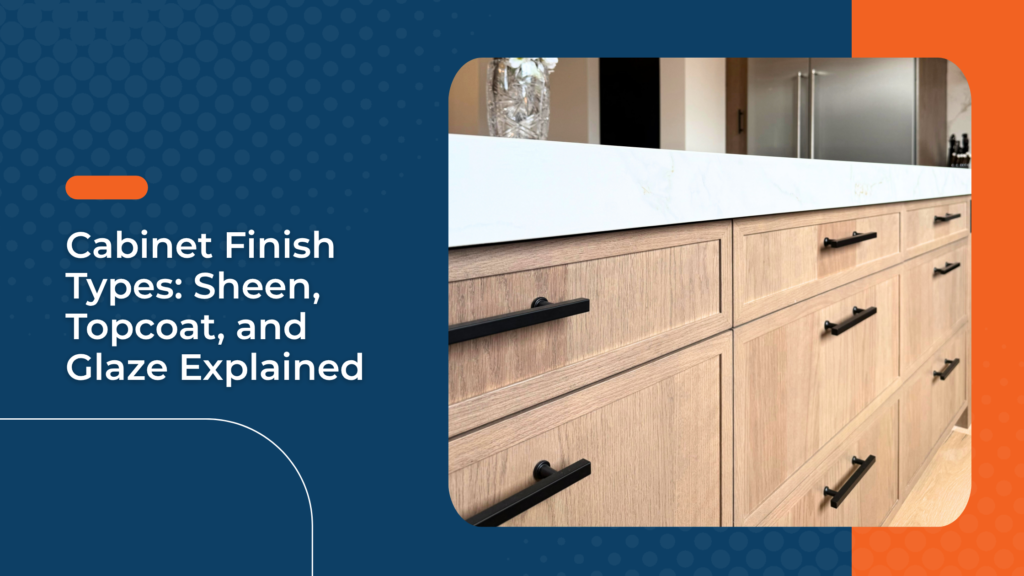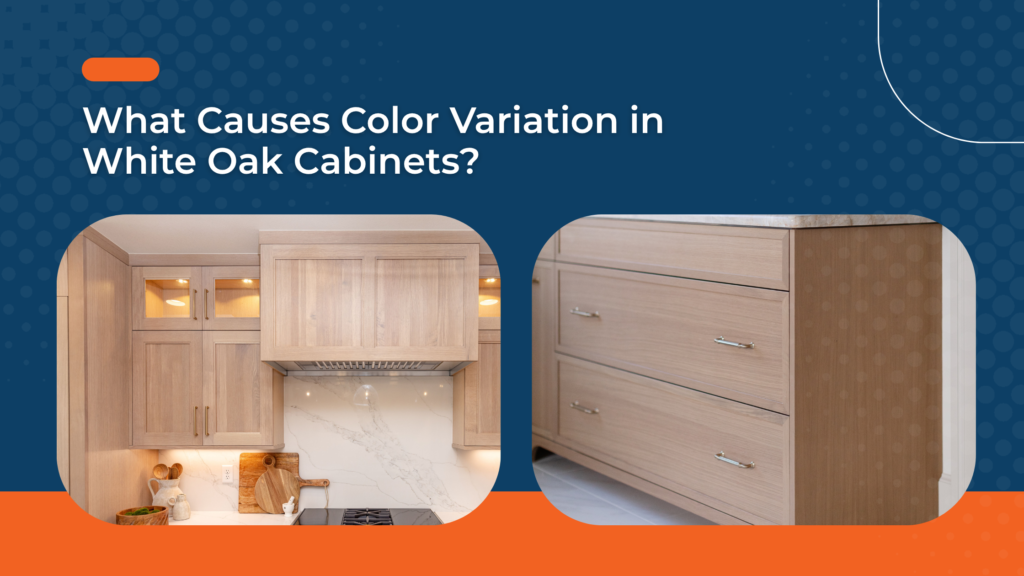
When designers and homeowners talk about a cabinet’s “finish,” they often mean the color. This can be the stain or paint that is applied to the door. What is sometimes skipped over in conversation and mood boards is the final topcoat, the sheen level, and any distressing techniques applied. That final layer can impact the design in a subtle way, tying the design together.
This post covers: sheen, topcoat, and glaze options that seal and finish a cabinet door. For choosing a stain or paint color, see our materials and finishes selection here. For techniques like distressing and antique wear, see our post on distressed kitchen cabinets.
What this post covers:
- The difference between color and topcoat finish on a cabinet door
- Stain finish options, including standard and upgraded gloss levels
- Paint finish options, including sheen and glaze techniques
- How sheen level affects wood grain, fingerprints, and everyday cleaning
- What to consider when specifying a finish for a client’s kitchen
Cabinet Finish Types: Cabinet Color vs Topcoat Finish
Color is the stain or paint first applied to the cabinet. This is the most impactful color choice and is what many homeowners will concern themselves with.
A topcoat or finish is the layer sprayed over the “color”, this includes the sheen level and any technique used to add depth or texture. Two doors in the same stain color can look noticeably different depending on the sheen and finishing techniques.
How Cabinet Sheen is Measured
A gloss meter measures sheen in degrees. A lower number means a flatter, more matte look. A higher number means more shine and reflection. Decor offers different sheen levels on both stain and paint, plus glaze options that add character to the base color.
Stain Cabinet Finish Options
Standard gloss finish
Decor applies a conversion varnish topcoat at 12 degrees of sheen as the standard finish on stained cabinetry. This low sheen, durable finish suits most kitchens. It lets the wood grain and stain color show through without much reflection.
Gloss finish upgrade
For a shinier look, clients can upgrade all doors and finished parts to a higher sheen finish of 35 degrees. This upgrade applies to every door and finished component in the project for a cohesive look.
Satin sheen
Satin sheen adds an elegant, opaque layer at 3 degrees of sheen. This flatter option works well when a client wants the wood grain to read as softly as possible. This is a trend-forward option right now, especially in contemporary kitchens. It also carries a Class A fire rating under ASTM E84.
Black and chocolate glaze
Black or chocolate glaze comes standard on certain stain colors and is a design choice on others. Decor sprays the glaze across the entire piece first, then wipes it off. Next, Decor applies glaze by bottle into corners and profile details, which adds depth and character. This creates an aged, traditional look to the cabinet and changes the overall tone of the base stain as well.
Paint Cabinet Finish Options
Standard sheen
The standard sheen on painted cabinetry is 20 degrees. This creates a nice durable shine to cabinet doors. The factory finish is smooth and professional.
Gloss finish upgrade
Like stained cabinetry, clients can upgrade painted doors and finished parts to a higher sheen finish at 40 degrees for a glossier look across all doors and components.
Glaze colors
Decor offers two glaze colors on paint: gray and caramel.
Finishing techniques for painted glaze
Hang up glaze. Decor applies this to profile details with a bottle, then brushes it by hand for the final look, then finishes with a clear topcoat. This technique leaves visible glaze sitting, or “hanging,” in the profile detail for a more pronounced effect.
Light brush glaze. Decor sprays this on and wipes it off, which gives a brushed look without any hang up in the profiles, then finishes with a clear topcoat.
Cornsilk glaze. Decor applies this to profiles by bottle, then brushes it. A second glaze pass gets sprayed on and brushed along the grain direction, then finished with a clear topcoat. This combines bottle application with a sprayed pass for a layered result.
What Degree of Sheen is Recommended for Cabinet Finishes?
While different sheens offer different things for the client, our standard finishes are a great option for many. For most kitchens, a 12 degree stain varnish or 20 degree painted finish works really well.
If you are changing the sheen of the cabinet keep these factors in mind:
- Lower sheen accentuates wood character. A flatter finish shows off natural wood features, like gum spots in cherry or color and grain variance in white rift oak. If a client picked a wood species for its character, a lower sheen lets that character show.
- Darker colors show sheen differently. Darker stains and paints tend to show more fingerprints and a more noticeable visual difference in sheen, simply because of how they reflect light. This isn’t a change in the actual sheen level. It’s how darker colors look under kitchen lighting.
- Cleaning habits affect appearance over time. Frequent or abrasive cleaning can gradually change how a finish looks. Mention this to clients with active households, especially on darker or higher-gloss finishes. You’ll want to share a cleaning guide with clients to help preserve their finish.
Talk through the kitchen’s end use with your client before finalizing a sheen. A busy family kitchen with kids and daily cooking has different practical needs than a secondary kitchen or a lower-traffic bath vanity.
FAQ About Cabinet Finish Types
Does a higher gloss finish cost more? Gloss upgrades usually come with an upcharge. However, double check with your cabinet manufacturer what sheen is standard and what is an additional cost to avoid surprises.
Can I mix sheen levels within one kitchen? A single kitchen typically runs one sheen level when all the cabinetry is either stain or paint. However, when it comes to two tone kitchens (where the top and bottom runs of cabinetry are different colors or finishes) this is where sheen can vary.
Does a lower sheen mean a less durable finish? No. Sheen level is primarily a look, not a durability rating. For wear and scratch durability across sheen levels, check with your manufacturing representative.