Distressed cabinets come in a few different looks: warm antique, heavy distressing, oversanding, to name a few. This post covers the main types of distressing on kitchen cabinets and how each one is manufactured.
Distressing Terms
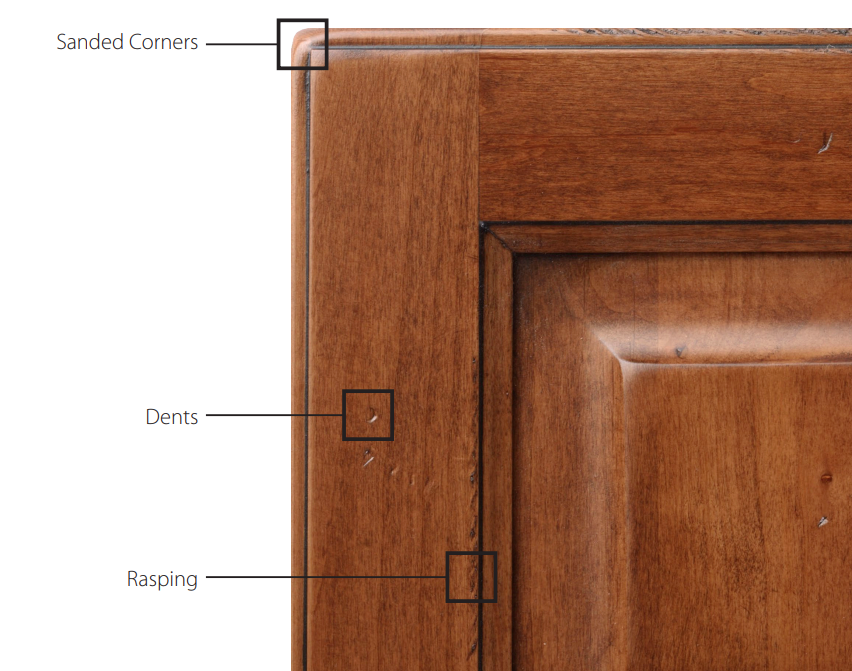
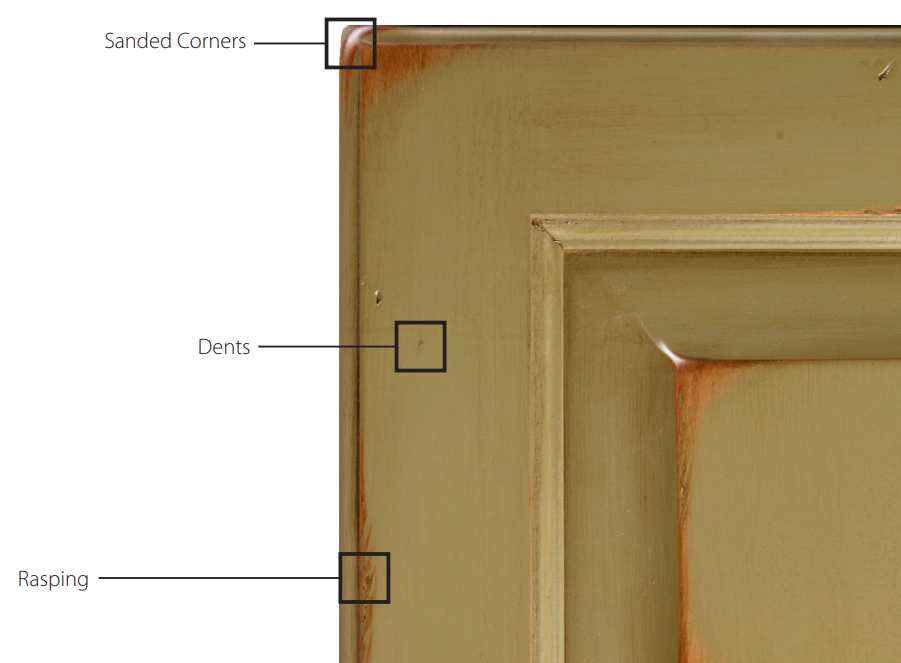
Sanding wears back the finish and material on corners and edges to soften the sharp factory profile.
Rasping uses a coarse file to cut shallow, irregular grooves along edges and profiles.
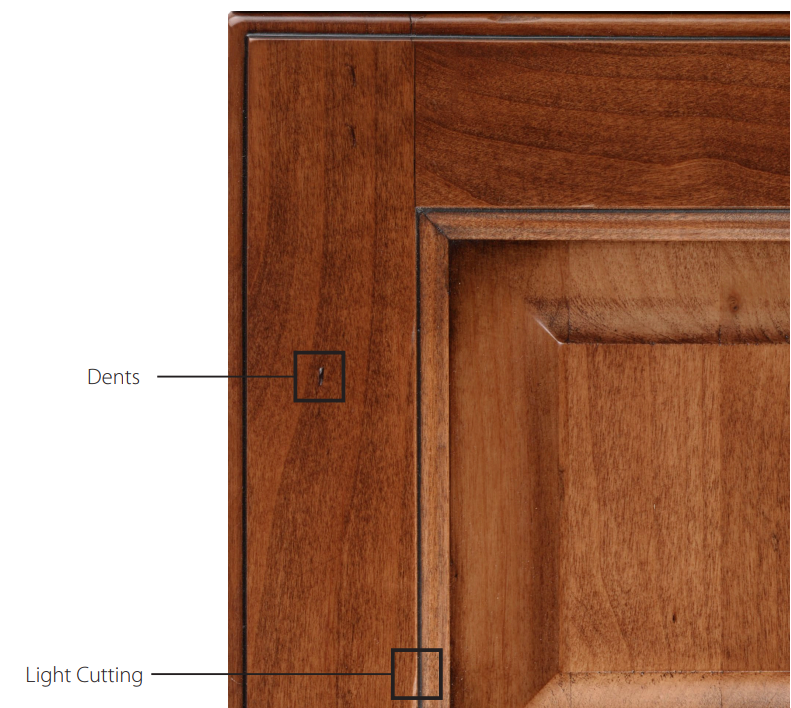
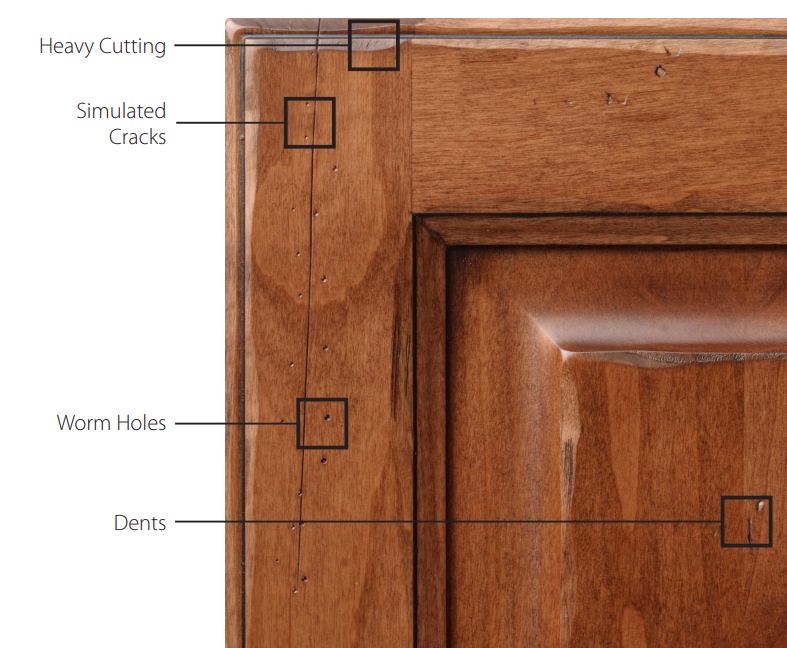
Dents are small impact marks pressed into the surface to mimic everyday knocks.
Worm holes are small holes that imitate the tracks left by wood-boring insects in old timber.
Simulated cracks are shallow splits cut into the surface to look like the cracking wood develops as it ages and dries.
Cutting uses a blade to chip and break the edges and profiles, taking out small pieces for a rougher worn look than sanding gives.
Antique Distressing
This distressing technique includes sanded corners, dents, and rasping. It is available on clear alder, knotty alder, and cherry.
Antique Wear
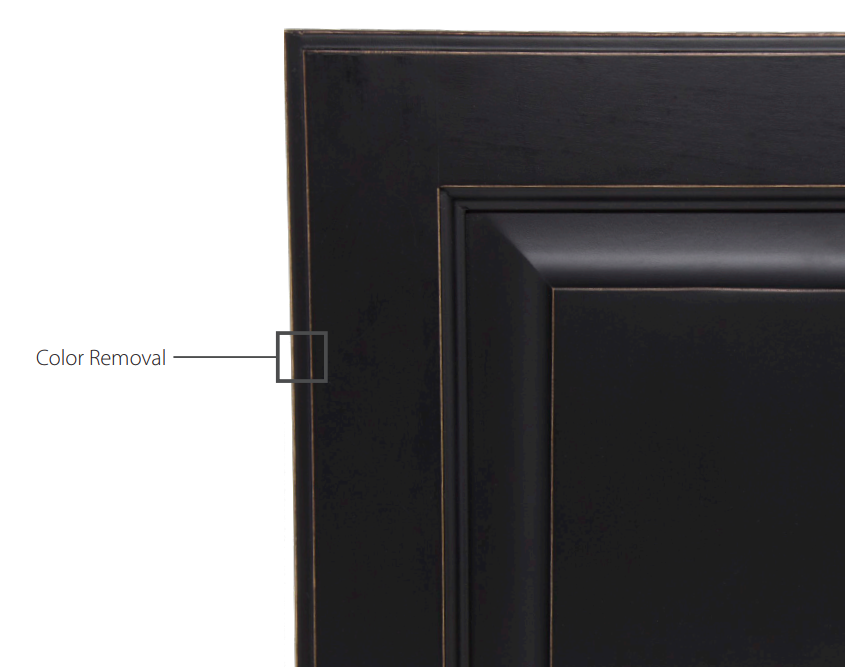
This distressing technique includes sanded corners (rub through finish), dents, and rasping. This is available on opaque finishes in alder only.
Light Distressing
Light distressing includes light cutting on sharp edges and profiles and dents. It is available on clear alder, knotty alder, and cherry.
Heavy Distressing
Heavy distressing on kitchen cabinets includes heavy cutting on sharp edges and profiles, worm holes, simulated cracks, and dents. It is available on clear alder, knotty alder, and mortise and tenon doors only.
Oversand
This distressing technique creates a light, weather worn look with slight removal of finish on most sharp edges and profiles. It is available on opaque finishes on clear alder.
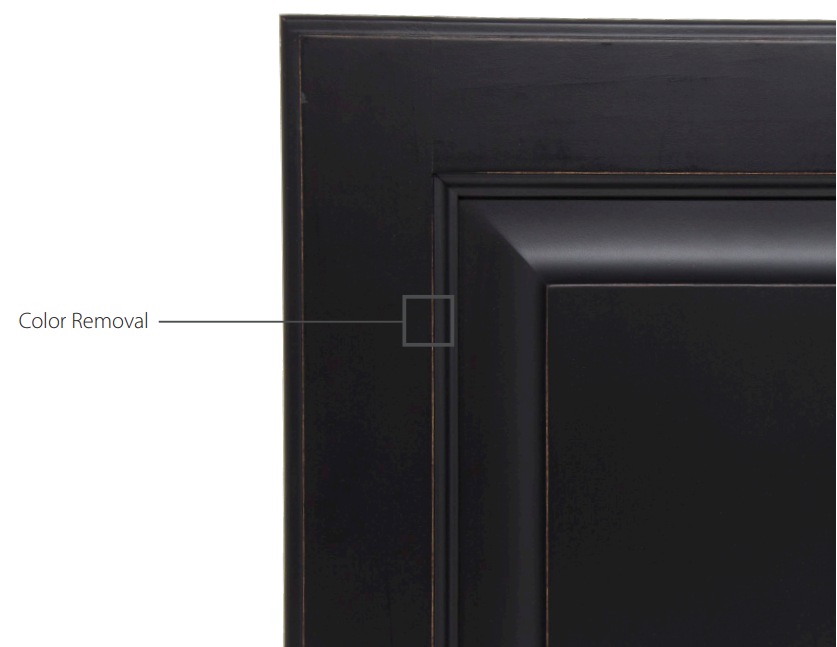
Rubthrough
This technique creates a heavy, worn look revealing the undercoat on sharp edges and profiles. It is available on opaque finishes on clear alder.