Cabinet edge banding is a critical part of cabinet construction that affects durability, finish, and long-term performance. For kitchen and bath designers, this detail is an important aesthetic choice, since it’s visible when a cabinet is opened. This guide will cover our manufacturer’s perspective for better edge banding design and construction.
Summary
- Cabinet edge banding seals and finishes exposed edges, protecting against moisture and creating a clean look.
- Good cabinets use higher-quality banding and PUR glue for a stronger seal.
- Case match edge banding is a modern approach that supports easier door replacement and more efficient ordering.
What Is Cabinet Edge Banding?
Cabinet edge banding is a strip of material applied to the raw edge of a cabinet box. It serves two main purposes:
- Seals the exposed material (often melamine or composite material) to prevent moisture from entering
- Creates a clean, finished edge that matches the cabinet design
Without proper cabinet edge banding, cabinet boxes are exposed to wear and water damage, which would greatly reduce the cabinet’s lifespan.
High Quality vs Low Quality Edge Banding
Cabinet edge banding varies in both material and application. Lower-quality cabinets (like cheap stock cabinetry) often use thinner banding and weaker adhesives, which can lead to lifting edges, bubbling, and visible seams over time. Higher-quality cabinetry (like semi-custom or custom cabinets) uses quality edge banding and stronger adhesives to ensure a strong bond and durable finish.
What Materials Are Used in Edge Banding?
PVC Edge Banding
PVC edge banding is a thin tape of thermoplastic polymer.
- Durable and consistent
- Best matches melamine case materials
- Shades can be found to best match the cabinet door finish
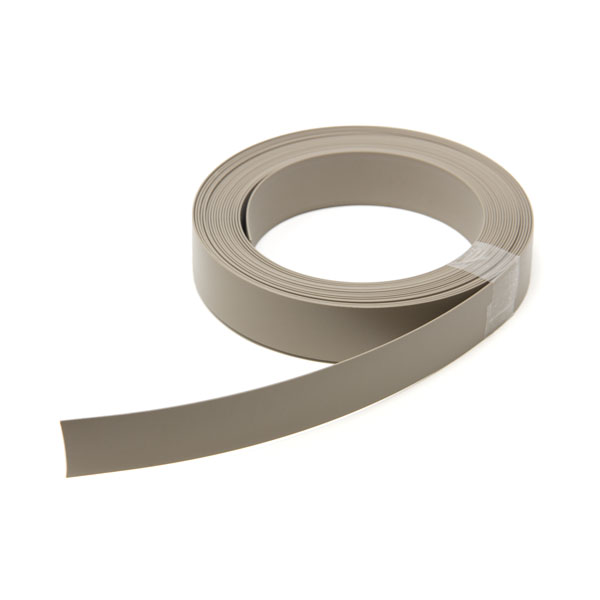
PVC edge banding does not provide an exact match to door finishes, even when a great match is found.
Veneer Edge Banding
Veneer edge banding is a thin tape of real wood.
- Matches wood grain and stain exactly
- Provides a seamless look with cabinet doors
- Can be painted to match door finish
Veneer edge banding delivers the closest possible match to door finishes, as it can be painted or stained with the door finish.
Edge Banding Adhesive
The performance of cabinet edge banding depends heavily on the adhesive used. The best adhesive is Polyurethane Reactive (PUR) glue, which creates a strong, permanent bond that seals the edge against moisture and prevents lifting or bubbling over time. This type of adhesive is a key part of higher-quality cabinet construction. PUR glue is water-resistant, making it a great adhesive for kitchen and bath applications.
What is the Lifespan of Cabinet Edge Banding?
The lifespan of the edge banding should be the same as the cabinets; for semi-custom or custom cabinets, this is 25-40 years.
Poor cabinet edge banding reduces the lifespan of cabinetry. When edges are not properly sealed, moisture can enter the cabinet core and cause swelling, delamination, and surface failure. A strong seal and proper material selection help protect the cabinet structure and maintain performance over time, especially in high-use areas like kitchens and bathrooms.
It is still recommended to be careful with steam, such as from kettles, for example, to avoid excess moisture and heat near edge banded parts, protecting the lifespan of your cabinets.
Cabinet Edge Banding Design Options
Designers typically have two approaches to choosing edge banding for their custom projects.
Case Match Edge Banding
Case match edge banding aligns with the cabinet box material. This creates a consistent interior look and supports a more modern design direction. With precise cabinet manufacturing, the edge banding is minimally visible when doors are closed, allowing the cabinet exterior to remain clean and uninterrupted.
Door Match Edge Banding
Door match edge banding aligns with the cabinet door finish. This approach has traditionally been used to reduce visible contrast between the cabinet door and the box, especially where small gaps or reveals occur. It helps maintain a consistent look across the front of the cabinet.
If you prefer to watch, our course “Case Match or Door Match?” is included in the Decor Academy for our designers, a professional development hub full of resources for kitchen and bath professionals. Become a Decor designer today.
Comparing Case Match and Door Match
Door Match Edge Banding:
- Helps conceal gaps between doors
- Keeps visual continuity with door fronts
Case Match Edge Banding:
- Supports a clean, modern interior look
- Keeps cabinet interiors consistent with case material
- Style makes it easier to replace cabinet doors in the future
With current manufacturing accuracy, case match edge banding is the better choice for designers and homeowners.
Where Different Edge Banding Is Used:
Cabinet edge banding is applied based on visibility and design intent. For Decor Cabinets:
- Finishes ends use veneer edge banding unless otherwise specified
- Non-finished ends use PVC edge banding unless otherwise specified
A cabinet may use veneer edge banding on an exposed edge to match the exterior finish, while all interior and hidden edges use PVC edge banding for consistency with the case. This approach allows the cabinet to meet both visual and functional requirements without overcomplicating the design.
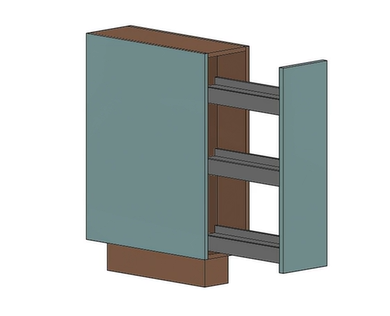
Why Case Match Edge Banding is Better:
We recommend case match edge banding for most projects. It supports both design flexibility and long-term value.
Key advantages:
- Allows easy cabinet door replacement in the future
- Reduces order complexity and processing time
- Improves consistency across projects
- Reduces material waste by using stocked case colors
Case match edge banding supports faster orders and better long-term outcomes.