The corner of a kitchen layout can either be optimized for storage or closed off and lost to an abyss. That choice is up to you, the designer, to decide for your clients which option fits their needs and budget. One way to optimize the storage capacity of a corner is a blind corner cabinet. Here is a look at some cabinet configurations worth reaching for when you are planning a client’s kitchen.
Here’s what you need to know:
- What a blind corner cabinet is and what options are available
- Blind corner cabinet configurations, in both left and right access
- What custom cabinet options are available
- The questions clients ask most about corner cabinets
What is a blind corner cabinet?
A blind corner cabinet is a corner unit where part of the interior sits behind the neighbouring cabinet and its door, out of sight and hard to reach. The hidden section is the “blind” part. It usually shows up where two cabinet runs meet at a 90 degree corner, most often in L-shaped and U-shaped kitchens.
Unlike a diagonal corner cabinet, which has an angled front that faces into the room, a blind corner keeps a straight cabinet line. That looks clean and it is efficient on the wall, but it leaves a pocket of storage tucked around the corner that is awkward to use without the right interior options.
The blind corner is a design challenge
The problem is access, not capacity. A blind corner often holds as much cubic space as any other base cabinet, but a good portion of it sits deep in the corner where the client cannot see it or reach it. Without a solution, that space becomes the spot where seldom-used items go to disappear.
There is also a clearance issue to plan around. The door and handle on a blind corner need room to open without hitting the adjacent cabinet, appliance, or hardware. The configuration you choose affects the cabinet size, the filler, and sometimes the placement of the range or dishwasher next to it.
Blind Corner Cabinet Options for Kitchen Designers
Designers have a few options for blind corner cabinets, in both left and right access, so the corner can match the way the run turns. Here are some common cabinet options.
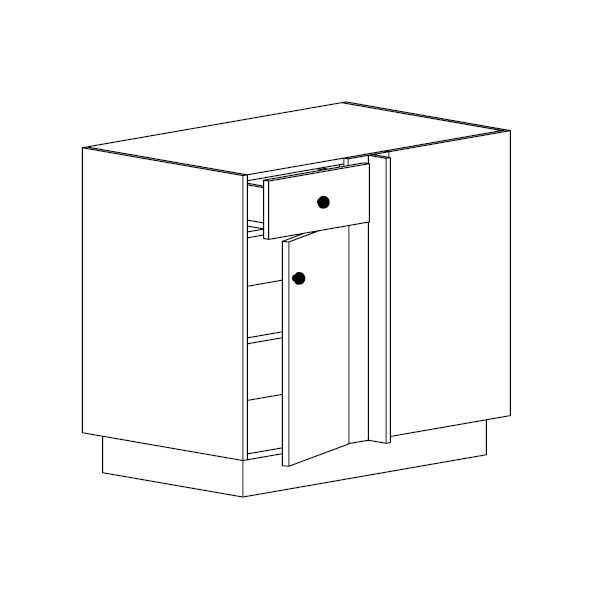
Blind corner with door and drawer, adjustable shelf
A straightforward blind corner with a door, a drawer, and an adjustable shelf inside. The drawer gives you easy-access storage up top, and the adjustable shelf lets you set the interior to the client’s needs.
This is the budget-friendly choice and a good fit when the corner is secondary storage. The client gives up some easy access to the deepest part of the corner in exchange for keeping the cost down, so be clear about that trade-off up front.
Details:
- Inset hinges, 95° opening angle
- Finished blind panel is profiled on one long edge (hinge side) to match door
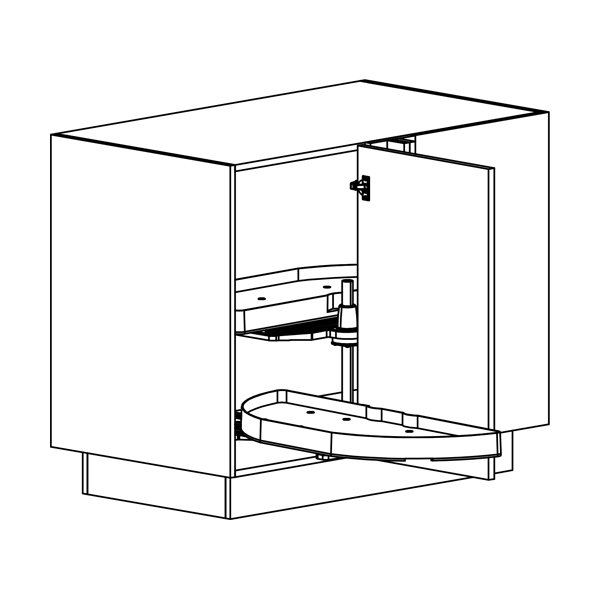
Blind corner with full-height door and two lazy Susans
A full-height door that opens to two pole-mounted lazy Susan shelves. The client spins the storage to the front instead of reaching around the corner, which makes this a strong option for access and value.
One detail worth knowing for the spec: the standard Susan is white plastic. If the client orders the natural maple melamine or birch plywood interior upgrade, the Susan comes in wood to match the interior.
A recommendation from our designers: if a client is looking at a two-Susan corner, put the Super Susan in front of them. It mounts to the shelves rather than a centre pole, so it is sturdier and easier to load, especially with heavier cookware. Our designers consider it a must-have, and it is the kind of upgrade clients are glad you flagged once they are living with the kitchen.
Details:
- Inset hinges, 95° opening angle
- Finished blind panel is profiled on one long edge (hinge side) to match door
- 2 Lazy Susan shelves (pole mounted)
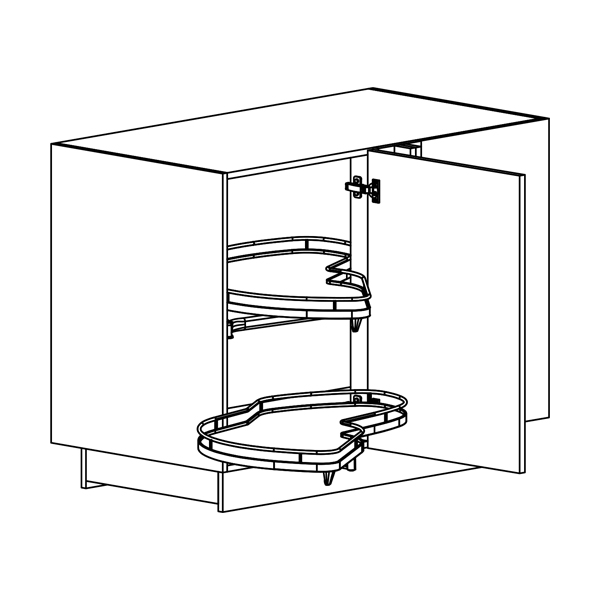
Blind corner with full-height door and Lemans II hardware
A full-height door with Lemans II hardware from Richelieu: two slide-out pivoting shelves that swing the rear storage out toward the client when the door opens. Instead of anyone reaching into the corner, the hidden section comes to them.
This is the fullest-access option in the lineup, and it is the one to show clients who want the most storage capacity possible. The pivoting shelves make even the deepest part of the corner genuinely usable.
Details:
- Lemans II hardware with 2 slide out pivoting shelves
- Soft closing mechanism comes as a standard
- 110° Hinges
- Available in 2 colors
As with any interior accessory, this adds to the client budget, however, the storage capacity and quality hardware is a great selling feature.
A quick tip for the client conversation: show the corner as a storage decision, not just a cabinet. When people can picture reaching everything they own instead of losing it around the bend, the upgrade makes sense to them.
Custom Options for the Blind Corner Cabinet
Corners are a great example of when a custom approach might be best. If standard cabinet options don’t quite fit the space, custom cabinets can make sure the corner is utilized well. If you want to talk through a specific corner before you spec it, send your drawing to the manufacturer and they can look over it and make sure your clearances are correct. (That’s the kind of service we offer our designers).
Frequently asked questions
What is a blind corner cabinet? It is a cabinet that sits at the corner of a kitchen layout, with part of the cabinet tucked behind the adjacent cabinet, creating a “blind” corner.
Which blind corner configuration should I choose? It depends on how often the client uses the corner and how much available storage space is available in the rest of the kitchen. Often clients choose what they have used before, so showing them options for ease of access helps the decision making process and can lead to an upsell.
Do blind corner cabinets come in left and right access? Yes. They can be manufactured in both left and right access so the corner matches the direction of the cabinet run.
Are the lazy Susan shelves plastic or wood? The standard Susan is white plastic. If the client orders the natural maple melamine or birch plywood interior upgrade, the Susan comes in wood to match the interior.
Do blind corner cabinets need a filler? Usually. A filler holds the door and handle off the neighbouring cabinet or appliance so the corner opens without binding. Confirm the clearance when you spec the corner. For more on that, see our guide to cabinet filler panels.
If you enjoyed this article, and want to keep learning more, the Cabinet Trends Report on Decor Academy pulls together what is moving in kitchen design right now, a great resource for when you are planning your next few projects.